August 24, 2026 · BlueGPS Team
10 Ways to Attach RTLS & Asset Tracking Tags to Manufacturing Tools
Attaching RTLS tags to industrial tools and MRO equipment isn't one-size-fits-all. Explore 10 physical mounting methods—from industrial adhesives and custom brackets to personnel clips—to ensure durability, RF performance, and safety.
Installing a real-time location system (RTLS) often raises a practical question that receives less attention than the choice of software or tracking technology:
How do you physically attach hundreds or thousands of asset tags to the things you want to track?
In industrial processes such as discrete manufacturing or maintenance, repair, and overhaul (MRO) operations, tracked assets can take many forms. From small screwdrivers, torque wrenches, and drills to test equipment, ground support equipment, carts, containers, jigs, fixtures, and calibrated instruments.
The reality is that there is no single attachment method that works for every asset.
A tag fitted to a tool used inside a confined space in an aircraft engine needs different treatment from one attached to a large maintenance trolley or forklift in a warehouse. A temporary tag used to track a critical part or subassembly has different requirements from a tag expected to remain on a piece of equipment for ten years.
The mounting method can also affect the performance of the tracking system itself. Metal can alter radio frequency (RF) behavior, for example, as can equipment or material that requires submersion in water.
The best approach is therefore to treat tag selection and tag attachment as one engineering decision.
Start With the Asset, Not the Tag
Before choosing an attachment method, consider how the asset is actually used.
Ask:
- Is the asset metal, plastic, composite, rubber, or another material?
- Does it experience vibration or impact?
- Will it be exposed to oil, fuel, hydraulic fluid, cleaning chemicals, water, or heat?
- Does it need to pass through a wash or sterilization process?
- Is the tag permanent or temporary?
- Will the tag need battery replacement?
- Could the tag interfere with how somebody holds or operates the tool?
- Could the tag or its attachment become a foreign object debris or foreign object damage risk?
- Can the asset itself be drilled, modified, or bonded?
- Does the tag need a particular orientation for the location technology to work correctly?
Tag manufacturers already support a wide range of mounting methods. Industrial tags are often designed for screws, rivets, adhesives, cable ties, magnets, or even welding.
The question is which method fits the asset and the process. In this article we’ll look at the options for attaching tracking tags to assets.
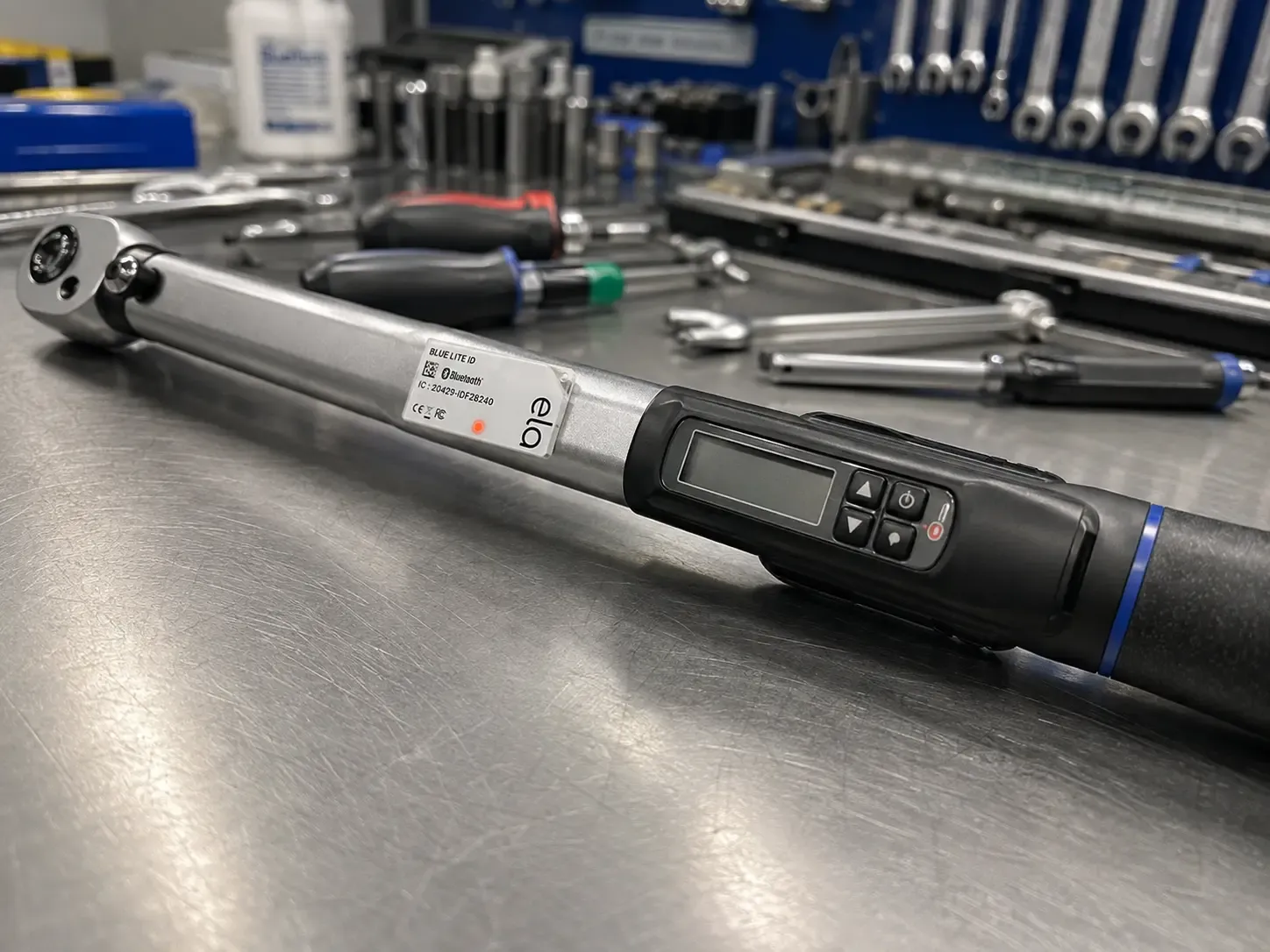
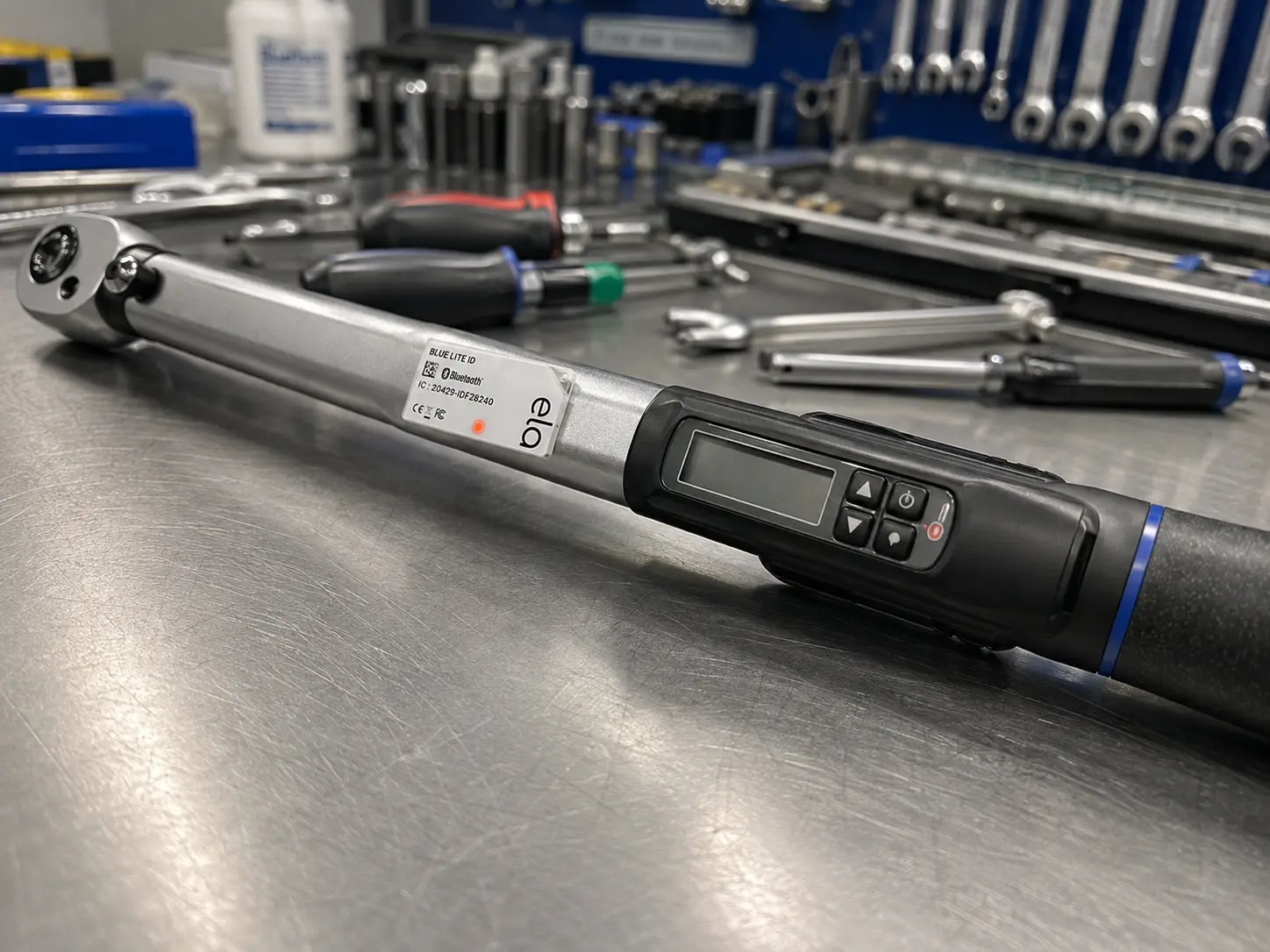
1. Pressure-Sensitive Adhesive
One of the simplest methods is a factory-applied adhesive backing or industrial double-sided adhesive.
The installer cleans the surface, removes the protective film, and presses the tag into position.
This approach works well for:
- Hand tools
- Test equipment
- Containers
- Cabinets
- Carts
- Plastic equipment housings
- Assets where drilling is undesirable
Many Bluetooth and RFID devices are designed specifically for adhesive mounting. Self-adhesive RFID labels are also available in versions designed for both metal and non-metal surfaces.
The main benefit is installation speed. An organization may need to tag hundreds or thousands of assets, so avoiding drilling, brackets, and mechanical fasteners can reduce deployment work, time, and cost.
The limitation is durability.
Whilst industrial adhesives are designed for strong bonds and challenging environments, ultimately the adhesive performance depends on surface preparation, surface energy, temperature, contamination, vibration, and the forces acting on the tag. Oil on a tool, for example, can prevent an adhesive from forming a reliable bond.
Position also matters. A tag attached to a protected flat section of a torque wrench may survive for years. The same tag placed on an exposed edge that repeatedly strikes a tool cabinet may not.
 \
\
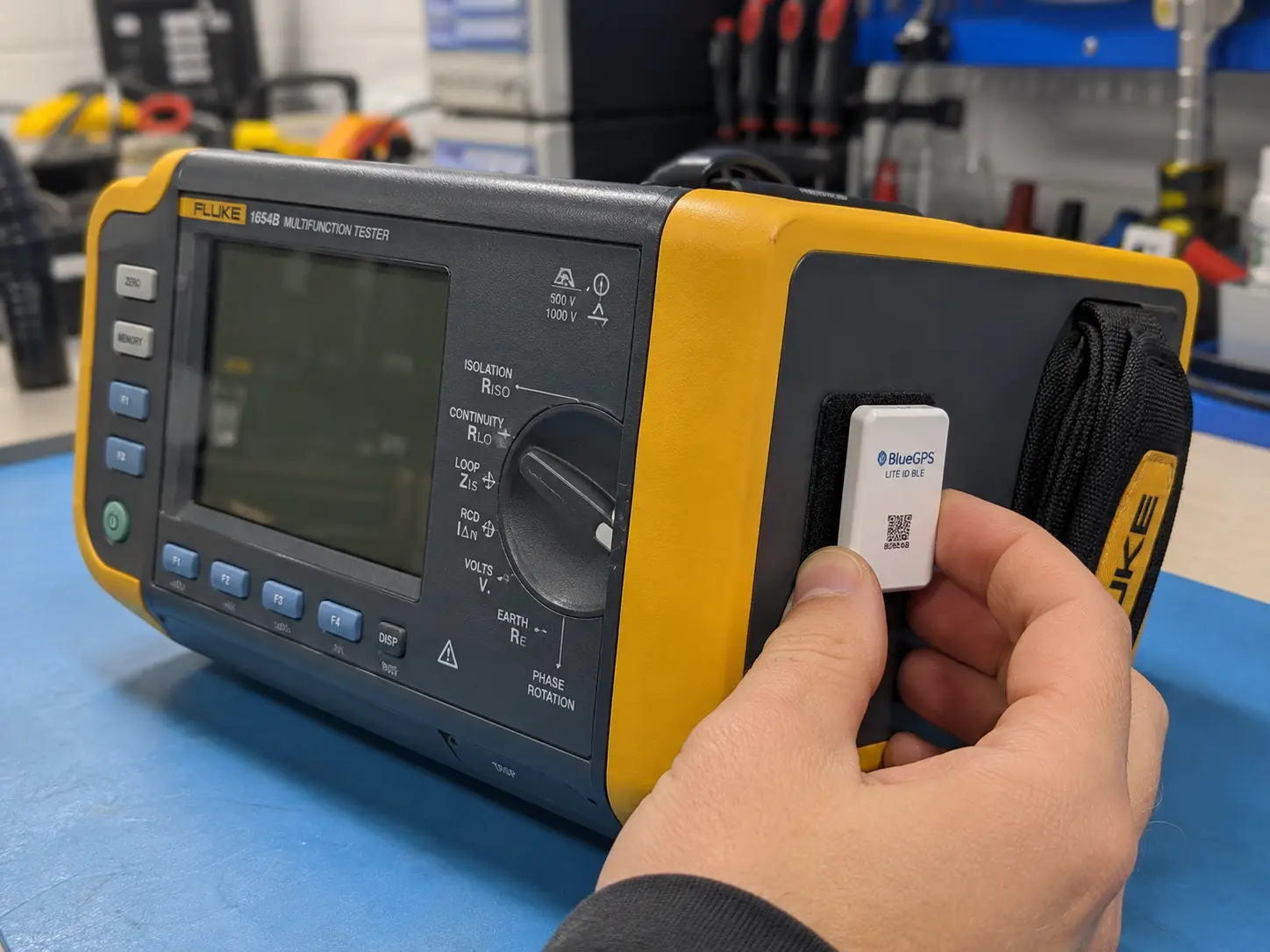
2. Industrial Hook-and-Loop Fasteners
For applications that need a stronger removable attachment, industrial hook-and-loop fasteners can provide an alternative to standard Velcro-type products.
Industrial versions use stronger adhesives and higher-strength fastening surfaces designed to cope with repeated handling, vibration, and heavier equipment. Some systems use interlocking plastic stems rather than conventional fabric hooks and loops, creating a firmer connection while still allowing the tag to be removed when required.
This can make them useful for:
- Battery-powered BLE or UWB tags that require periodic replacement
- Test equipment
- Toolboxes and cabinets
- Carts and mobile equipment
- Reusable containers
- Assets where drilling or permanent bonding is undesirable
One part of the fastener can remain attached to the asset while the tag is removed for battery replacement, servicing, or reassignment. This can reduce maintenance work compared with permanently bonding the electronic tag itself.
Industrial hook-and-loop mounting also gives installers some flexibility during an RTLS deployment. If testing shows that a tag performs better in a different position or orientation, it can often be moved without modifying the asset.
However, the adhesive that attaches the fastener to the asset remains a potential point of failure. Surface preparation, temperature, contamination, vibration, and exposure to oils or cleaning chemicals all need to be considered.
In certain applications such as satellite manufacturing or aircraft MRO, the ability to remove the tag also needs to be balanced against FOD controls. For critical tools or equipment used inside or around an aircraft, the mounting method should be strong enough to prevent the tag or fastening material from becoming detached during normal use.
3. Structural Adhesive or Epoxy
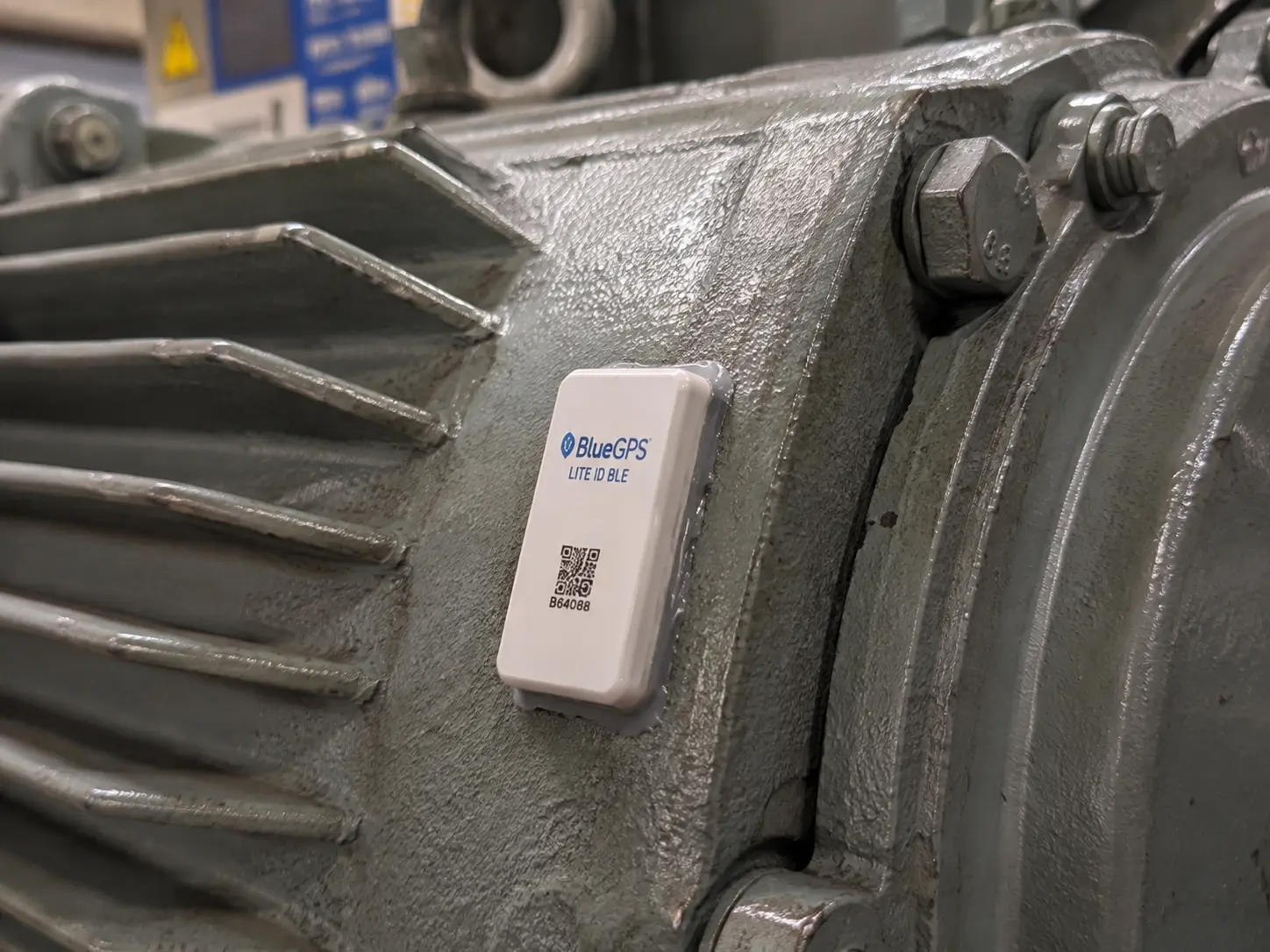
Where a stronger permanent bond is required, tags can be bonded using an industrial adhesive or epoxy rather than an adhesive pad.
This is common where:
- The asset cannot be drilled.
- The surface is irregular.
- The tag must withstand vibration.
- The installation is intended to remain in place for years.
- Removing the tag should be difficult.
Epoxy can also fill small gaps between the tag and an uneven surface.
This can make it suitable for tools and industrial equipment where a standard adhesive pad cannot achieve enough surface contact.
The trade-off is removal.
A bonded tag may be difficult to replace without damaging the tag, the finish, or the equipment. This becomes important with battery-powered BLE or UWB tags. If the battery or tag will eventually need replacement, the installation should allow maintenance without modifying the asset each time. Alternatively, consider the lifetime of the asset tag against the lifetime of the asset. They may coincide.
An variation is to bond a mounting plate or holder permanently to the asset and make the asset tag semi-removable.
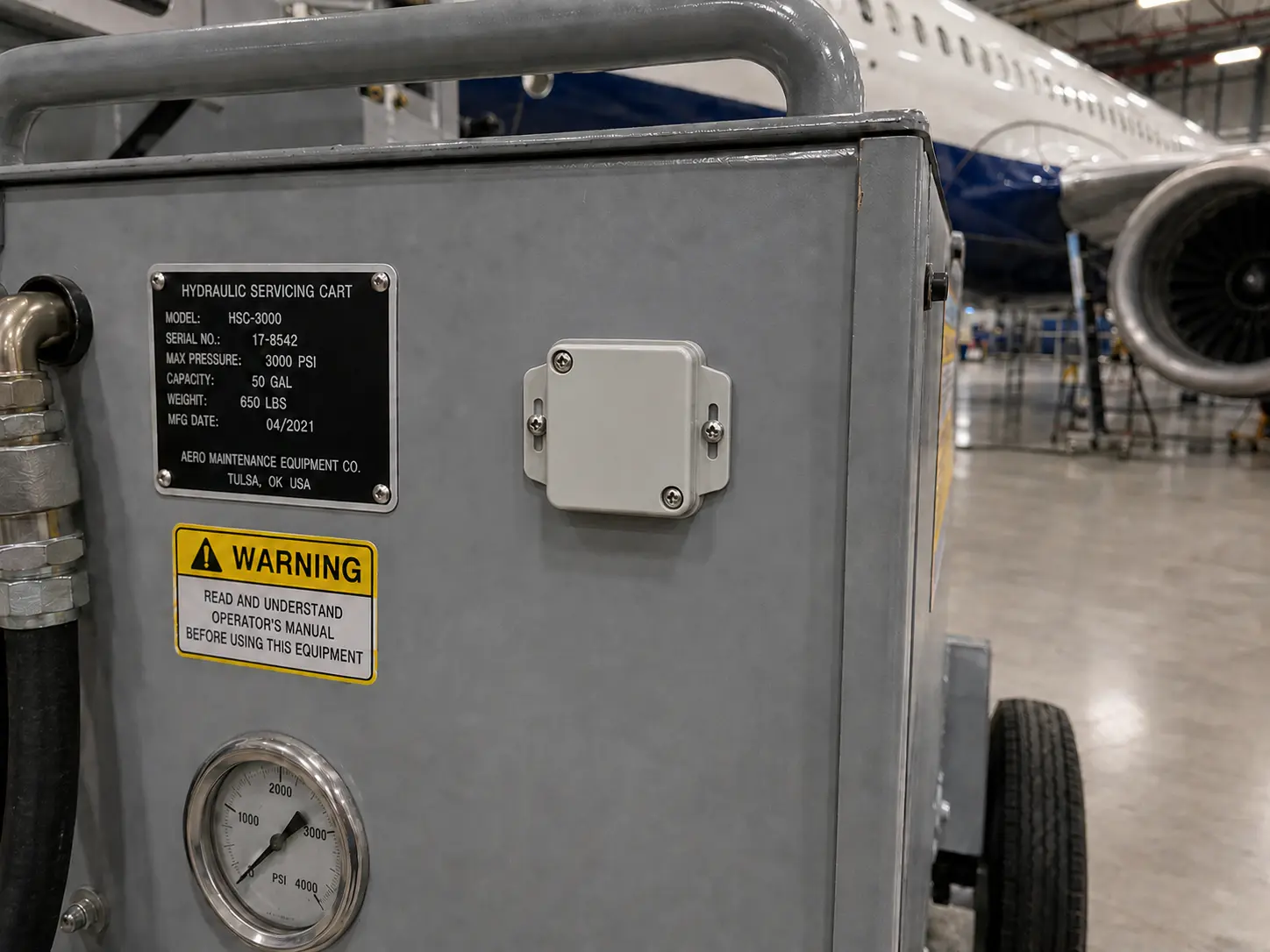
4. Screws and Bolts
Mechanical fastening provides one of the most secure mounting methods.
Many rugged industrial tags include mounting holes specifically for screws or bolts. The BlueGPS industrial tag for example is designed for fixation using screws and other mechanical methods.
Screws work particularly well on:
- Tool cabinets
- Fixtures
- Jigs
- Carts
- Ground support equipment
- Machinery
- Large power tools
- Reusable containers
They also make tag replacement easier. A technician can remove the screws, replace the tag, and reuse the mounting points.
However, drilling holes into the asset is not always acceptable.
This becomes particularly important with calibrated tools, precision equipment, load-bearing components, and equipment covered by manufacturer requirements. The organization should determine whether modifying the asset is permitted before drilling it.
The mounting hardware itself also needs consideration. A loose screw introduced into an aircraft maintenance environment can create a problem that the tracking system was intended to help prevent.
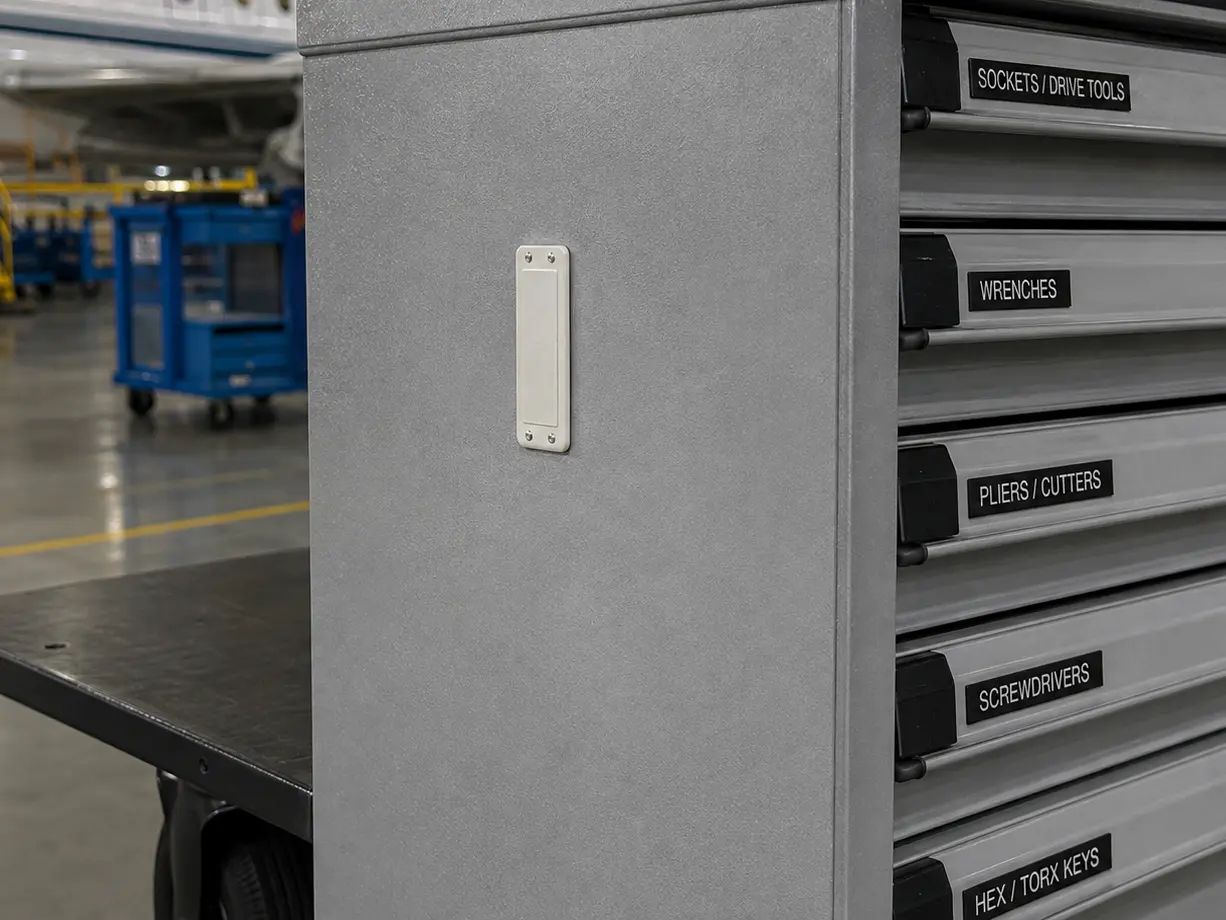
5. Rivets
Rivets provide a permanent mechanical connection without relying on adhesive.
They are often used for tags attached to:
- Metal containers
- Toolboxes
- Industrial equipment
- Frames
- Racks
- Carts
- Fixtures
Rivets are harder to remove accidentally than screws and do not normally loosen through routine vibration in the same way that an unsecured threaded fastener might.
Some industrial tags are manufactured with reinforced holes specifically for rivet installation.
The disadvantage is similar to screws: the asset normally needs a hole.
Replacing the tag also requires drilling out the existing rivet and installing another.
For equipment expected to remain in service for many years, that may be acceptable. For a battery-powered tag that needs periodic servicing, another mounting method may make more sense.
6. Cable Ties and Straps
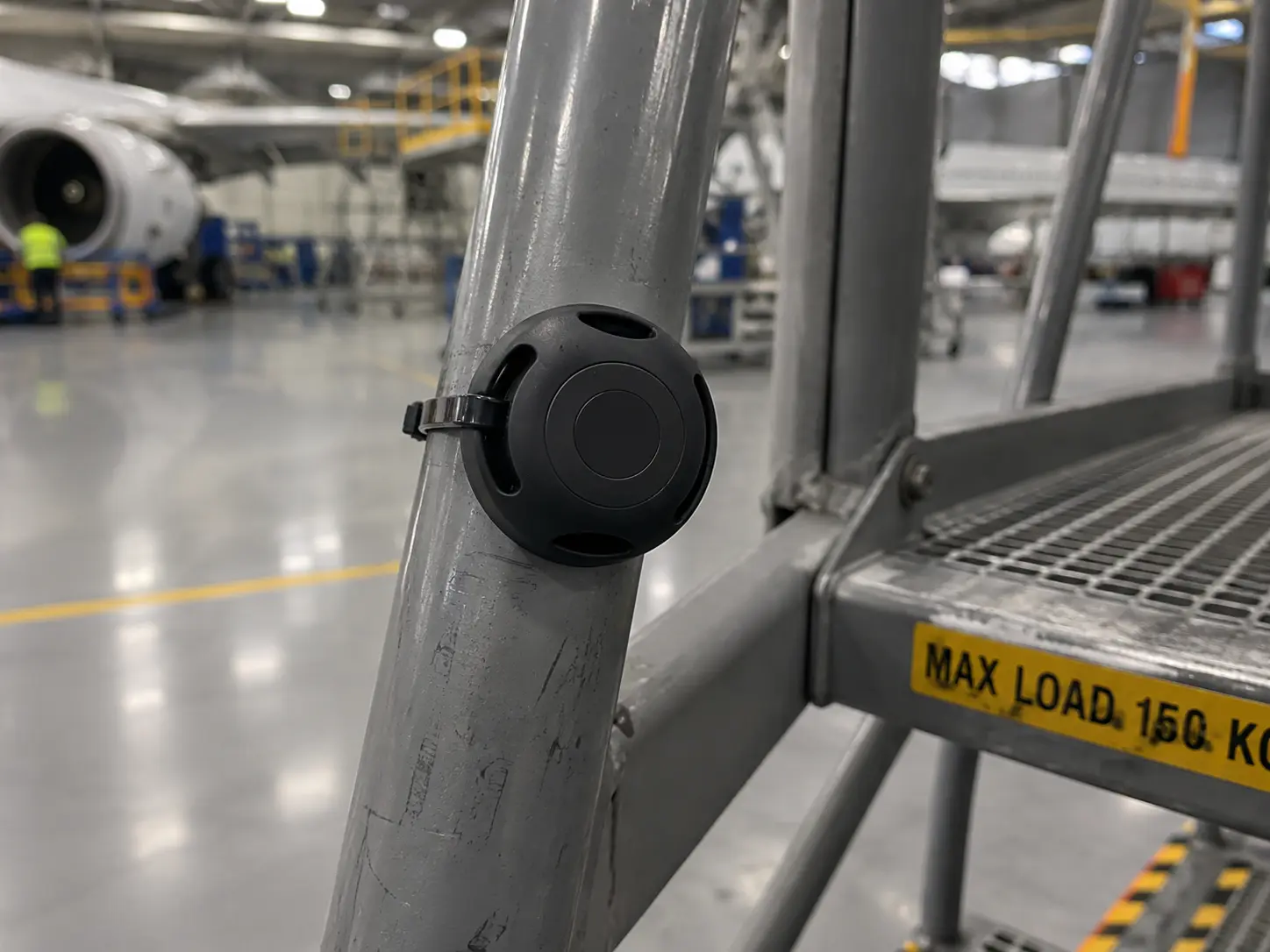
Cable ties provide a fast way to attach tags without modifying the asset.
They work well where the tool or equipment already contains:
- Handles
- Frames
- Loops
- Pipes
- Guard structures
- Cable runs
- Mounting points
Flexible industrial tags are available with mounting arrangements designed specifically for cable ties.
Cable ties are also useful during pilot deployments. A company testing RTLS on 50 assets may not want to make permanent modifications until it has confirmed where tags should be positioned.
The method has limitations.
A tag suspended from a loose cable tie can move, strike surrounding equipment, become caught, or interfere with use. In MRO environments for example, loose attachment methods also need to be assessed as part of tool and FOD control.
For long-term use, locking metal bands or purpose-designed straps may provide a stronger alternative.
7. Magnets
Magnetic mounting allows a tag to be installed and removed without drilling or adhesive.
Some rugged industrial tags are offered with magnetic fixation options.
Magnets can work well for:
- Steel carts
- Large tooling
- Temporary tracking projects
- Maintenance equipment
- Containers
- Movable production fixtures
They are especially useful when the same tag needs to move between assets.
However, magnetic mounting requires careful control.
The tag can be removed easily, either intentionally or accidentally. Vibration or impact can also move it.
Magnetic mounts are therefore more suitable for controlled applications than for small tools used around maintenance or production process where a detached tag could become a foreign object.
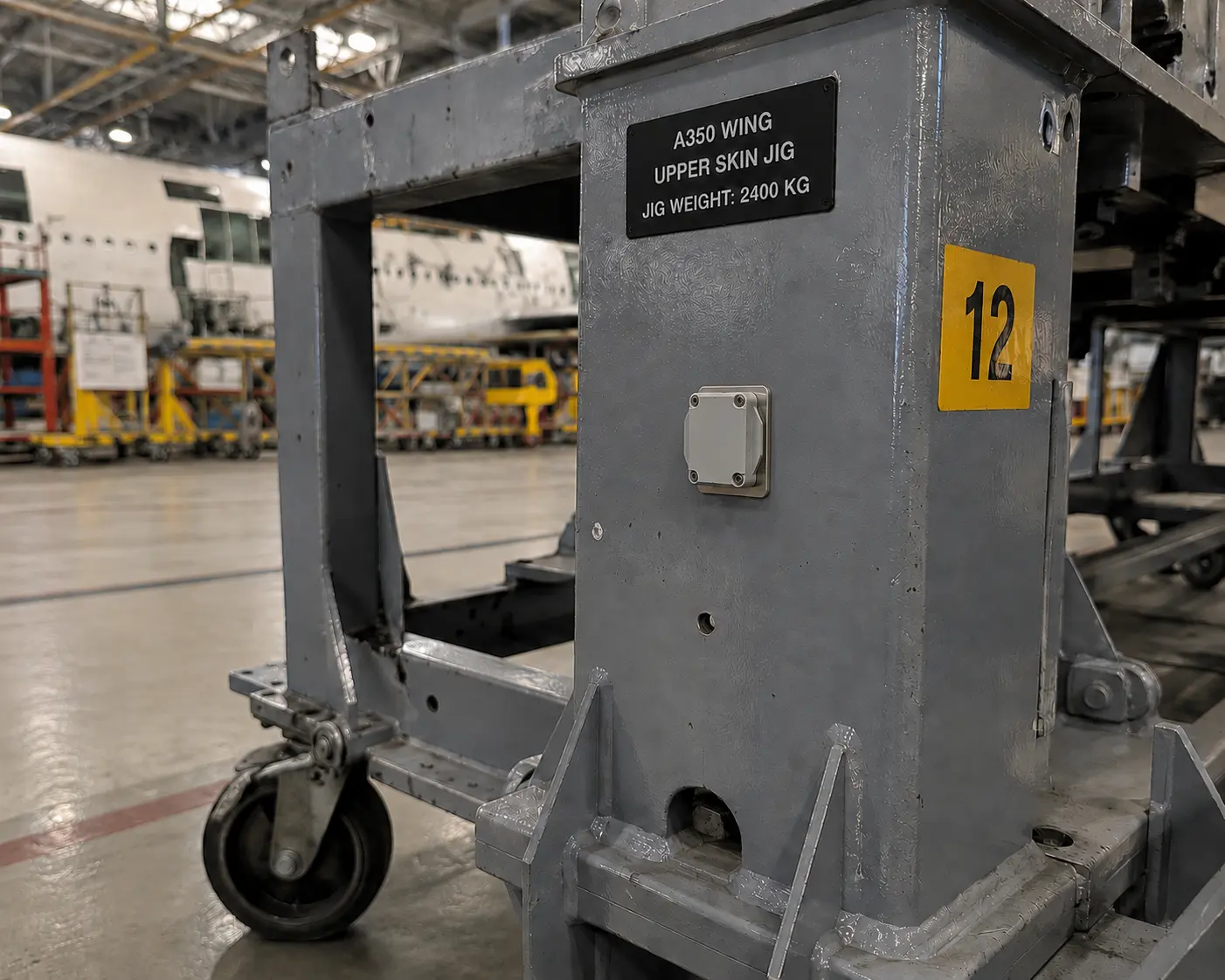
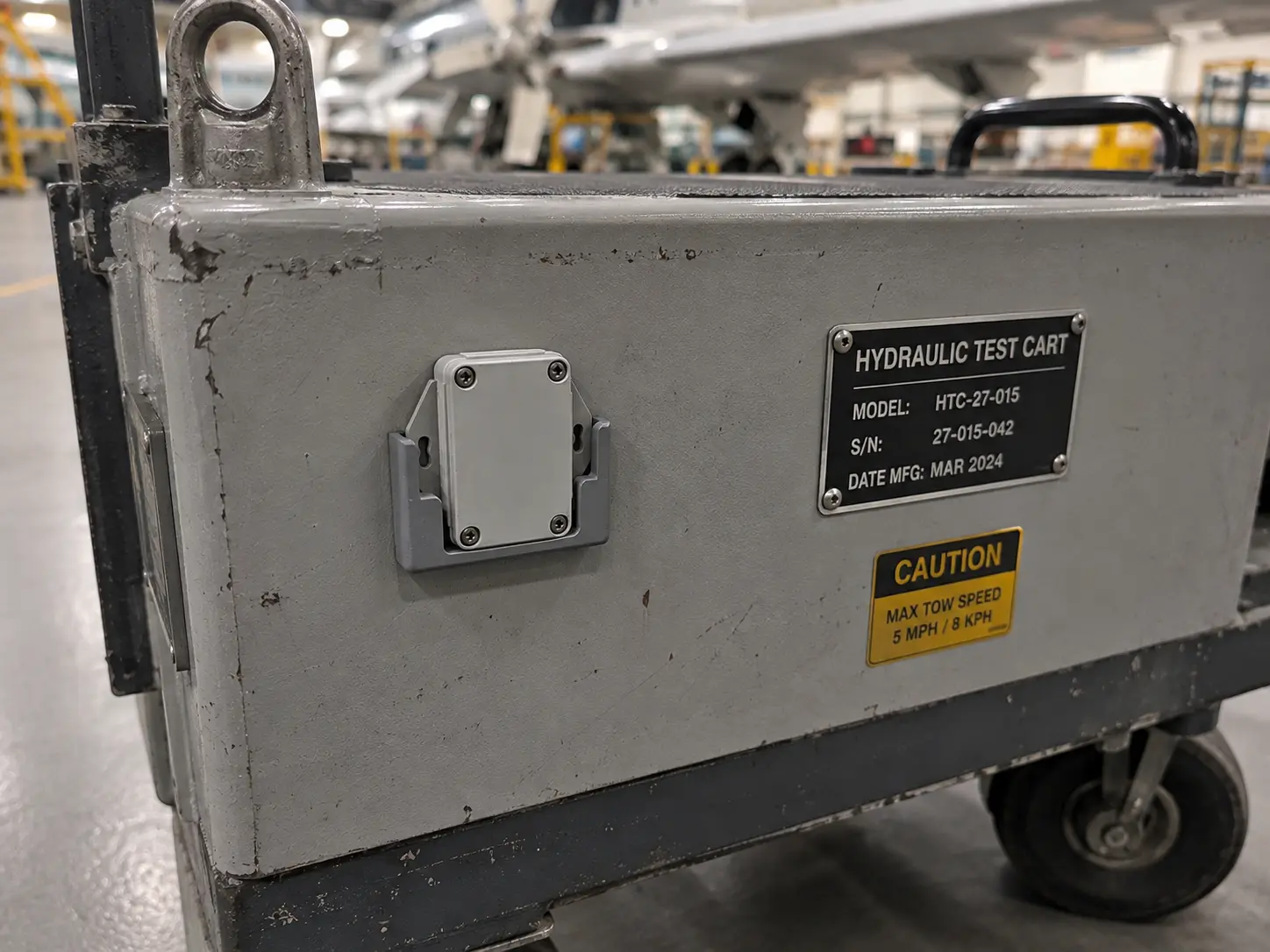
8. Custom Brackets and Tag Holders
Sometimes the best solution is not to attach the tag directly to the asset at all.
A mounting bracket, clip, cradle, or holder can be designed around the asset.
The bracket may be:
- Bolted to the equipment
- Bonded to the equipment
- Clipped around a handle
- Attached to an existing mounting point
- Incorporated into a protective cover
The electronic tag then fits into the holder.
This approach separates two requirements that are often confused:
How do we permanently attach something to the asset?
and
How do we replace the electronic tag later?
A permanent bracket combined with a removable tag can solve both problems.
It can also provide a defined tag orientation, which may help maintain consistent radio performance.
Custom mounts require more work during deployment, but they can make sense when an organization has hundreds of identical assets.
9. Embedded Tags
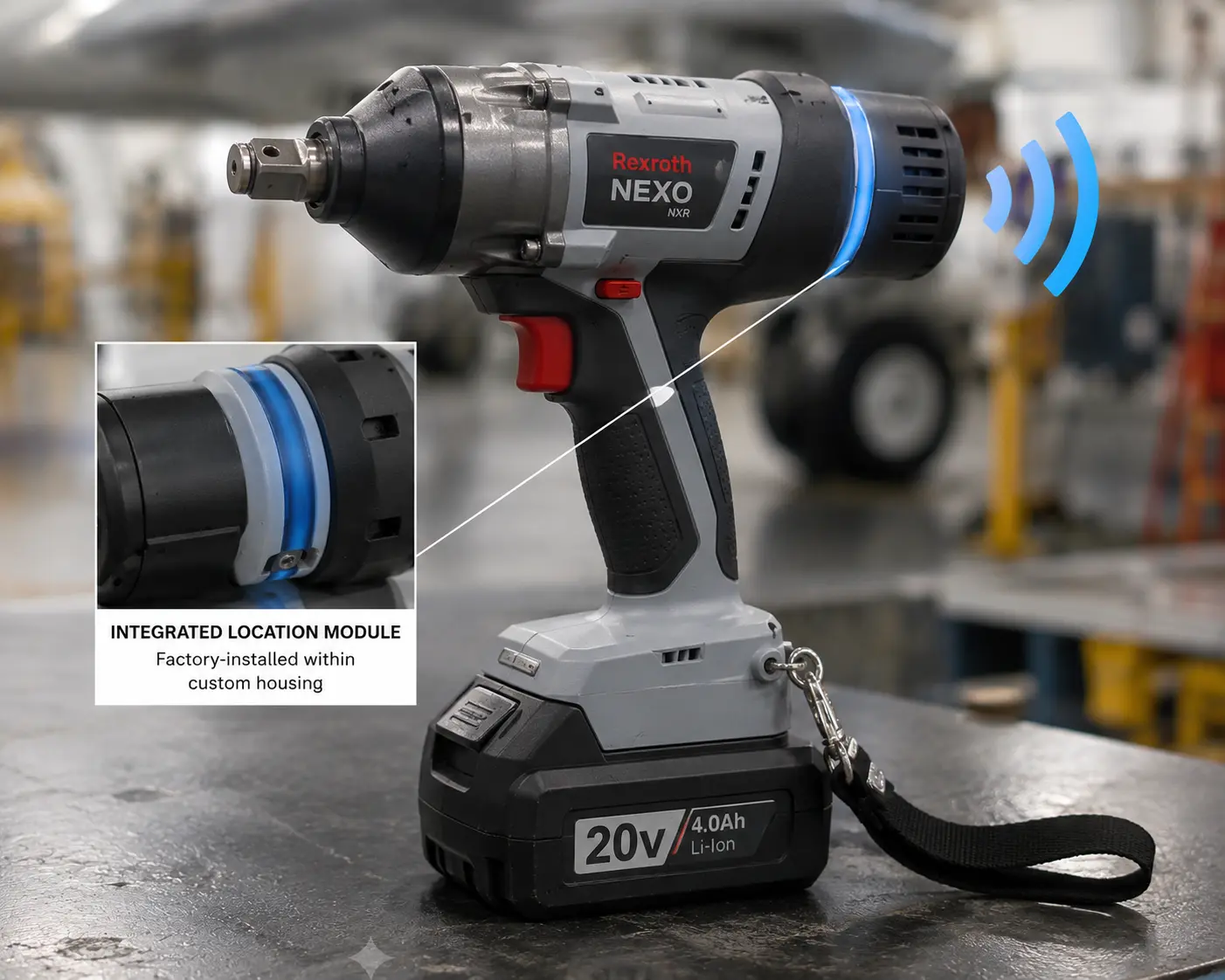
For some tools, one option is to incorporate a tag into the tool or equipment rather than placing it on the surface.
Very small asset tags without casings are available for this purpose. Some can be integrated into housings or used with custom enclosures, while others are designed specifically for tracking small assets such as tools and instruments.
Embedding can protect the tag from impact and reduce the chance that it catches on other equipment.
It also reduces the physical footprint.
However, the design needs to account for RF performance. Simply placing a radio device inside a metal tool housing may prevent it from operating correctly.
Embedded tagging therefore normally requires more engineering and testing than external mounting. Talk to your tool vendor in case they offer factory fit or optional asset tag integrations.
10. Attaching RTLS Tags to Workers and Technicians
RTLS can also track technicians, operators, and other personnel as they move through a manufacturing plant, maintenance facility, hangar, or warehouse. This can be useful it you want the asset or tool associated with a worker rather than fixing the tag directly to the tool.
Common ways to wear a personnel tag include:
- Lanyards and badge holders
- Clips attached to a shirt or jacket
- Belt or pocket clips
- Wrist-worn tags
- Helmet or hard-hat mounted tags
- Tags incorporated into other PPE or workwear
The choice is not simply about convenience. Where a person wears the tag can affect both location performance and worker safety.

The Human Body Can Block RF Signals
Personnel tracking creates a challenge that does not exist to the same extent with many assets: the person wearing the tag can block its radio signal.
The human body contains a high proportion of water, which absorbs radio energy at frequencies commonly used by technologies such as Bluetooth Low Energy (BLE). As a result, positioning performance can change when the wearer’s body sits between the tag and the receiving infrastructure. Because the human body can attenuate signals (and that simply turning so that the body blocks the radio path can change received signal strength) both placement of tags and density of locating infrastructure is important in worker tracking.
A badge hanging freely on the chest may work well when the worker faces the location infrastructure but may experience more signal obstruction when the person turns around. A belt-mounted tag can spend more time close to the body and may also be obscured by clothing, equipment, or the worker’s arms. These are not necessarily issues if there are multiple locators positioned to see the tag from different worker positions.
A helmet-mounted tag can reduce some of this body shielding because the tag sits above much of the body and surrounding equipment. However, the best position depends on the RTLS technology, antenna design, receiver placement, and working environment. Personnel tag location should therefore be tested as part of system commissioning rather than assumed in advance.
Lanyards and Badge Holders
Lanyards are convenient because most workers already understand how to use them, and an RTLS tag can sometimes be combined with an existing ID or access badge. However, a hanging tag can move as the person walks, bends, climbs, or works. That movement may matter when the tag’s accelerometer supports functions such as fall or man-down detection.
Lanyards can also create an entanglement risk around rotating machinery, conveyors, and other moving equipment. OSHA advises workers not to wear loose items that could become caught in moving machinery. Where lanyards are used, the site’s risk assessment should therefore determine whether they are appropriate and whether a breakaway design is required.
Belt and Clothing Clips
A belt, pocket, or clothing clip provides a more fixed position and avoids a tag swinging from the neck.
This can work particularly well where the tag also includes:
- A call or assistance button
- Man-down detection
- Motion sensing
- Audible alerts
- Vibration alerts
The position should allow the worker to reach the tag without interfering with tools, harnesses, protective clothing, or other equipment.
Consistency also matters. If some workers wear a tag on the chest, others on a belt, and others inside a pocket, RF performance may vary between users. Defining a standard wearing position can therefore help make location performance more repeatable.
Helmet-Mounted Tags
For technicians who already wear a hard hat or other protective helmet, mounting the tag to the helmet is often the optimal placement.
This keeps the tag away from pockets, tools, and equipment worn around the waist and may provide a clearer radio path to location infrastructure. It can also create a consistent tag position across the workforce.
However, the tag should not interfere with the purpose, fit, or use of the PPE. PPE should always be selected and worn so that it fits correctly and does not prevent workers from performing their work safely.
The additional weight and position of the tag also matter. A large battery-powered device mounted to one side of a helmet may become uncomfortable during a full shift or catch on equipment in confined areas. Where helmet mounting is used, smaller and lighter tags are generally easier to integrate into normal work.
Safety and Comfort Matter as Much as Location Accuracy
A personnel tracking tag may be worn for eight or more hours at a time.
If it is heavy, uncomfortable, difficult to attach, catches on equipment, or needs constant adjustment, workers are more likely to remove it, move it, or wear it differently from the intended position. That can undermine the location data.
As with tools and equipment, there is no universal answer.
A lanyard may suit someone working in a stores area. A belt clip may work better for an aircraft technician. A helmet-mounted tag may make sense for workers already required to wear head protection.
The aim is to find the point where location performance, safety, and everyday usability meet. A personnel tag only delivers value if workers can wear it safely and consistently while the RTLS can still locate it reliably.
Metal Tools Need Particular Attention
Much of the equipment found in industrial processes, manufacturing, and MRO is made from metal.
That matters because metal can interact with the electromagnetic field used by RF and other wireless technologies.
For passive RFID in particular, a standard tag mounted directly against metal may experience significant detuning. Similar considerations apply to active positioning technologies.
Location systems estimate position from characteristics of the radio signal received from the tag. Tag orientation, surrounding metal, obstruction, and multipath propagation can therefore affect positioning performance.
This is why tag mounting should form part of the RTLS commissioning process. A tag may be mechanically secure and still be installed in the wrong place. Best to consult an RTLS professional with experience in your specific industry or application.
Tag Attachment in Critical Processes such as Aircraft MRO Requires Another Level of Control
Aircraft maintenance creates an additional concern: the tag must not become part of the foreign object problem.
An organization introducing asset tracking to support tool control should avoid creating hundreds of poorly secured devices that can themselves detach.
Quuppa specifically notes the importance of making tags identifiable in aviation environments because of FOD policies.
For tools used around or inside an aircraft, several principles make sense:
- Avoid attachment points where the tag could interfere with tool operation.
- Keep tags away from working surfaces.
- Avoid covering identification numbers or calibration labels.
- Do not create sharp edges or snag points.
- Use mounting methods appropriate for vibration and repeated handling.
- Treat the attachment mechanism as part of tool inspection.
- Consider what happens if the tag becomes loose.
- Make the tag visible enough that damage or partial detachment can be identified.
- Check that modifications to calibrated or controlled tools are permitted before drilling, riveting, or machining them.
The aim is not simply to make the tag stay on the tool. It is to make the tag part of the controlled asset.
Permanent Versus Temporary Tagging
One of the easiest ways to narrow the choice is to ask how long the tag needs to remain attached.
For permanent asset tracking, common options include:
- Industrial adhesive
- Epoxy
- Screws
- Rivets
- Permanent brackets
For semi-permanent tracking, consider:
- Screws
- Replaceable brackets
- Heavy-duty adhesive
- Cable ties
- Straps
For temporary tracking, options include:
- Magnets
- Hook-and-loop fasteners
- Clips
- Cable ties
- Removable holders
The correct choice depends on the operating process rather than the RTLS technology alone.
There Does Not Need to Be One Tag or Attachment Method
A common mistake when planning RTLS is to assume every asset must use the same tag type and fixing method.
That can force compromises.
A large maintenance stand may have space for a rugged battery-powered tag secured with screws. A torque wrench may require a tag close to the size of a coin. A container may only need a passive RFID label. A production fixture may use a removable magnetic tag.
Modern location platforms such as BlueGPS can support multiple different device types and tracking technologies within the same operational environment.
That allows the organization to select the tag and attachment method around the asset instead of selecting the asset around the tracking system.
A Small Mechanical Decision That Deserves Early Attention
Tag attachment can look like one of the simplest parts of an RTLS project.
In practice, it affects deployment time, maintenance, tag life, RF performance, usability, safety, and the total cost of keeping the system operating.
The best method may be adhesive on one asset, screws on another, a cable tie on a third, and a custom bracket on something else.
For manufacturing and MRO operations, the starting point should therefore be the asset and the process:
Where can the tag be placed so that it remains secure, does not interfere with work, can be maintained, and still provides the location performance the application requires?
Answer that question first, and choosing the attachment method becomes much easier.
\