November 9, 2026 · BlueGPS Team
Interview: How real-time location tracking helps aircraft maintenance teams
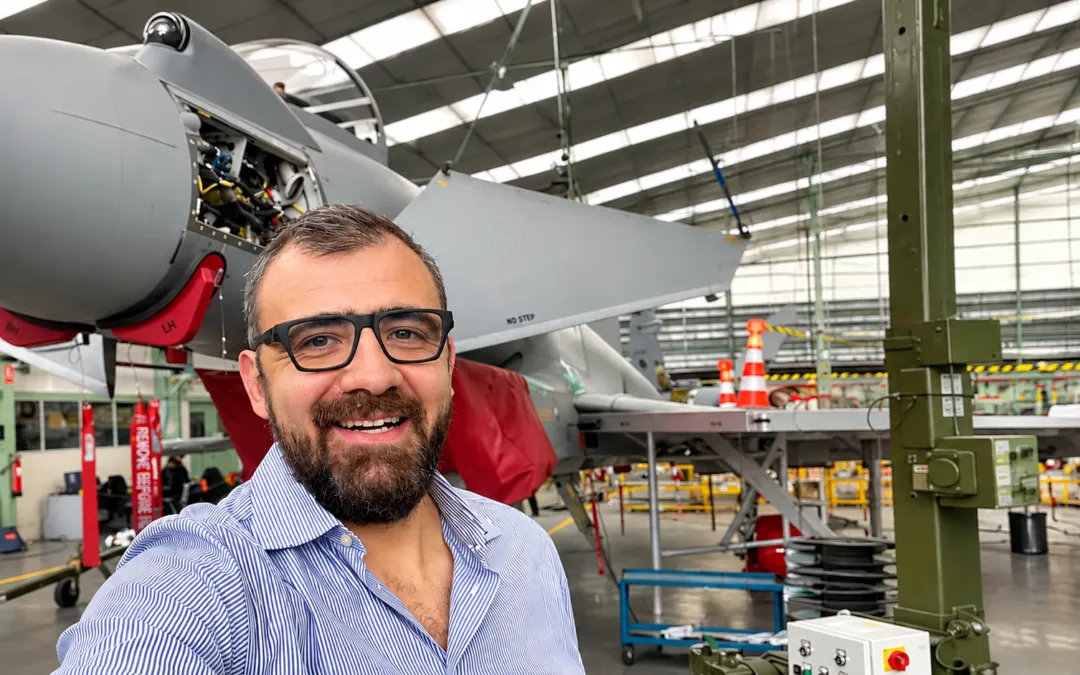
In an interview with Hangar Italy, Domenico Mariotti explains how BlueGPS helps aircraft maintenance teams track tools, reduce the risk of foreign object damage, and find delays between work stations. He also shares lessons from working with Airbus Helicopters and Thales Alenia Space.
A missing tool can hold up an aircraft release. A part that hasn’t reached the next work station can leave a technician waiting. Both problems are easier to resolve when the maintenance team can see where tools and parts are and when they last moved.
In an interview with Hangar Italy, Domenico Mariotti, CEO of Synapses, the company behind BlueGPS, explained how real-time location systems (RTLS) can support aircraft maintenance, repair, and overhaul (MRO). He discussed tool control, aircraft turnaround time, and what BlueGPS has learned from working with Airbus Helicopters and Thales Alenia Space.
Reducing the risk of foreign object damage
A tool checkout record shows who collected a tool. Before an aircraft returns to service, the maintenance team also needs to know whether the tool has left the work area.
BlueGPS can define a digital zone around an aircraft and track tagged tools as they enter and leave. If a tracked tool still appears inside the zone during a pre-release check, the system can flag it so the team can investigate. That gives technicians another way to identify a tool left behind and reduce the risk of foreign object damage (FOD).
The movement history can also help after a job is complete. If a torque wrench is later found to be out of calibration, the team can review its recorded movements to identify which aircraft work zones it entered and when. That narrows the investigation and helps the team decide which maintenance records to check.
Finding where turnaround time is lost
Location data can also show where work slows down. As tagged parts or equipment move between stations, BlueGPS can record when they arrive and how long they stay. Teams can compare that history with the planned sequence to spot a missed step or see where a part spent longer than expected.
A part that repeatedly waits between two stations, for example, gives the team a handoff to investigate. The location history shows when the wait began and how long it lasted. The team can then check whether it was waiting for an inspection, equipment, or an available technician.
Adding live location data to existing maintenance workflows
Mariotti pointed to Airbus Helicopters and Thales Alenia Space as examples of customers with established processes and their own ways of working. The integration challenge is to make location data available within those processes. BlueGPS can feed location updates into systems such as SAP or maintenance software, so teams can see where a tagged item is without relying on a technician to scan it at every handoff.
Mariotti also looked ahead to using location history to anticipate delays. If a part typically needs to reach a station by a certain point in the schedule, knowing where it is now could help a team spot a likely delay while there is still time to act.
Read the original interview with Domenico Mariotti on Hangar Italy (in Italian).